computability
Last edited: August 8, 2025Computational Biology Index
Last edited: August 8, 2025Computational Biology is a the study of biology using computation.
Rather that starting from the properties, start with the end states or what properties it has; instead, we define the initial values based on the edges.
Constructor theory: https://en.wikipedia.org/wiki/Constructor_theory?
- the relationship between temperature and occurance of a uniform gas is actually right-skewed; the mean temperature in a uniform closed system will be higher than the median temperature
- molecules are not static: at best, molecules are static when frozen in place; yet, generally it is not in their nature to stay solidly in place; they just shuffle around but maintain the molecular sturucture
If the energy level is higher, it will ignore various troughs
Computational Complexity Theory
Last edited: August 8, 2025Computational Task
Last edited: August 8, 2025Decision problems
- a decision problem: \(\Sigma^{*} \to \qty {\text{no}, \text{yes}}\)
- we often associate the “yes” instances of this decision problem as a \(L \subseteq \Sigma^{*}\) language
“Given boolean formula \(\varphi\), accept IFF \(\varphi\) is SAT”
Function problems
Give me a particular case of:
\begin{equation} f(w) : \Sigma^{*} \to \Sigma^{*} \end{equation}
note that there is a unique answer.
“Give a formula \(\varphi\), output lex first satisfying assignments/number of satisfying assignments”
computer number system
Last edited: August 8, 2025bit
A computer is built out of binary gates:
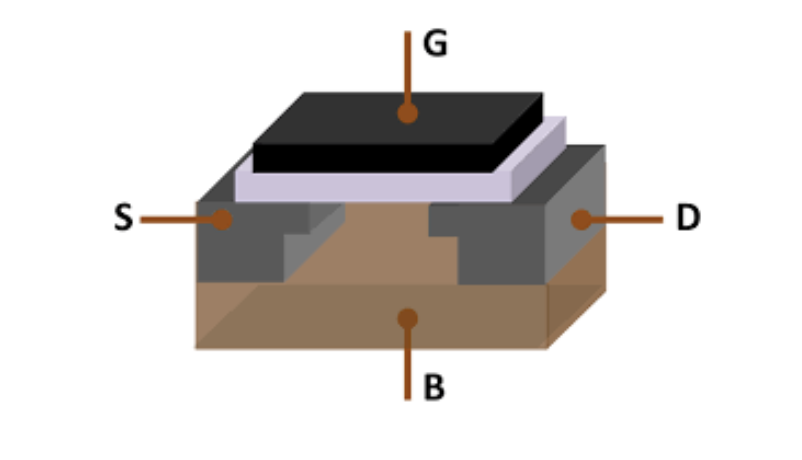
So, having voltage into \(B\) allows current to pass through between \(S\) and \(D\), it could be on/off.
byte
Accumulation of \(8\) bits
Computer memory is a large array of bytes. It is only BYTE ADDRESSABLE: you can’t address a bit in isolation.
bases
Generate, each base uses digits \(0\) to \(base-1\).
We prefix 0x to represent hexadecimal, and 0b to represent binary.